
Views: 0 Author: Site Editor Publish Time: 2026-10-02 Origin: Site


Specifying substandard instrumentation carries compounding operational risks. A single sensor failure can trigger catastrophic process downtime, severe safety incidents, or massive environmental liabilities. The global pressure measurement market currently exceeds $3.28 billion. Procurement and engineering teams face a highly saturated and fragmented supplier base. Distinguishing between vertically integrated engineering partners and low-tier assemblers proves increasingly difficult. You need a systematic, evidence-based framework to vet a pressure transmitter manufacturer. This guide focuses on technical capabilities, verifiable compliance, cross-functional alignment, and supply chain resilience. You will learn how to evaluate suppliers objectively and secure reliable instrumentation for your critical industrial processes.
Certification Verification is Non-Negotiable: Prioritize manufacturers with transparent, verifiable documentation for hazardous environments (ATEX, IECEx, FM, CSA) and functional safety (SIL 2/3).
Material Science Dictates Longevity: Sourcing a reliable corrosion-resistant pressure transmitter requires evaluating the manufacturer's expertise in specialized wetted materials (e.g., Hastelloy, Tantalum) and diaphragm seal construction.
Lifecycle Value Outweighs Unit Price: Evaluate long-term calibration stability, failure rates, and post-sale engineering support rather than competing solely on initial procurement costs.
Scale Must Match Procurement Strategy: Align your volume and customization needs with the right supplier tier, whether seeking a specialized industrial OEM pressure transmitter partner for bespoke solutions or a mass-market distributor for standard utility applications.
Purchasing teams naturally focus on cost reduction and supply chain efficiency. Engineering teams demand high-performance specifications and absolute reliability. This inherent friction often leads to compromised purchasing decisions. You must establish joint evaluation rubrics. These rubrics balance initial procurement costs against the necessity for customizable sensing solutions. Complex process applications require specific form factors and signal outputs. A unified approach ensures the selected supplier meets both financial targets and strict technical requirements.
To achieve this alignment, implement a structured evaluation process:
Define mandatory technical specifications before reviewing any commercial terms.
Assign weighted scores to supplier capabilities, prioritizing Mean Time Between Failures (MTBF) over initial unit cost.
Conduct joint vendor audits involving both procurement officers and lead instrumentation engineers.
Establish acceptable failure rate thresholds and mandate root-cause analysis for any deviations.
This collaborative framework prevents buyers from sourcing inadequate sensors simply because they fit the immediate quarterly budget.
Calibration drift directly impacts process yield, product quality, and energy consumption. A sensor drifting beyond acceptable limits causes control valves to overcompensate. This wastes raw materials and energy. Consider a boiler feed water system. A pressure reading that drifts by just 0.5% forces the feed pump to work harder. This increases electrical draw and accelerates mechanical wear on the pump seals. In emissions monitoring applications, inaccurate pressure readings can lead to severe regulatory fines and forced plant shutdowns.
Budget sensors offer tempting initial savings. Those savings evaporate quickly. Unplanned maintenance, process shutdowns, and safety breaches carry exponential costs. Replacing a failed sensor in a hazardous area requires hot work permits, scaffolding, and specialized labor. The true financial impact of a cheap sensor far exceeds its purchase order value. You must factor in the labor hours required for frequent recalibration and the lost revenue from unexpected downtime.
Standard utility monitoring differs vastly from critical process control. Monitoring cooling water or plant air requires basic functionality. Controlling reactions in oil refineries or chemical processing plants demands absolute precision and rapid response times. You must define your volume and lifecycle requirements early. Some projects need prototyping agility for custom skid designs. Others require guaranteed mass production consistency for large-scale deployments. Match your application demands directly to the manufacturer's proven track record in similar environments.
Application Type | Typical Media | Required Precision | Primary Supplier Focus |
|---|---|---|---|
Utility Monitoring | Water, Compressed Air | Standard (±0.5%) | High availability, low unit cost |
Process Control | Steam, Light Hydrocarbons | High (±0.1%) | Long-term stability, digital outputs |
Severe Service | Acids, Slurries, Sour Gas | Ultra-High (±0.05%) | Exotic materials, safety certifications |
Tier 1 suppliers dominate the market through extensive R&D and comprehensive product portfolios. They maintain global field support networks. These companies offer solutions for nearly every industrial application and integrate seamlessly with major Distributed Control Systems (DCS). Their scale comes with distinct drawbacks. They typically enforce long lead times and rigid customization options. Mid-volume buyers often struggle to get specialized attention. Adapting a standard product for a unique machine design proves difficult and time-consuming with Tier 1 conglomerates. You will likely face high minimum order quantities for any non-standard configurations.
Mid-tier engineering partners offer high agility and deep technical focus. Sourcing an industrial OEM pressure transmitter from a specialized manufacturer provides custom form factors and white-labeling capabilities. They deliver highly customizable sensing solutions for niche industrial uses. These partners provide optimized performance ratios. They excel at modifying process connections, electrical interfaces, and firmware to match your exact machine specifications. You must still conduct rigorous vetting. Evaluate their supply chain stability, in-house testing facilities, and long-term financial health to ensure they can support your production lifecycle.
Regional suppliers focus on aggressive production speeds and high availability. They cater primarily to non-critical, low-risk applications. These manufacturers utilize standardized components to keep production moving quickly. The main drawback is variable quality control. You face a higher risk of compliance gaps and limited post-sale technical support. Use these suppliers strictly for applications where sensor failure causes zero safety risks and minimal process disruption. They rarely offer the engineering depth required for complex integration or hazardous area deployment.
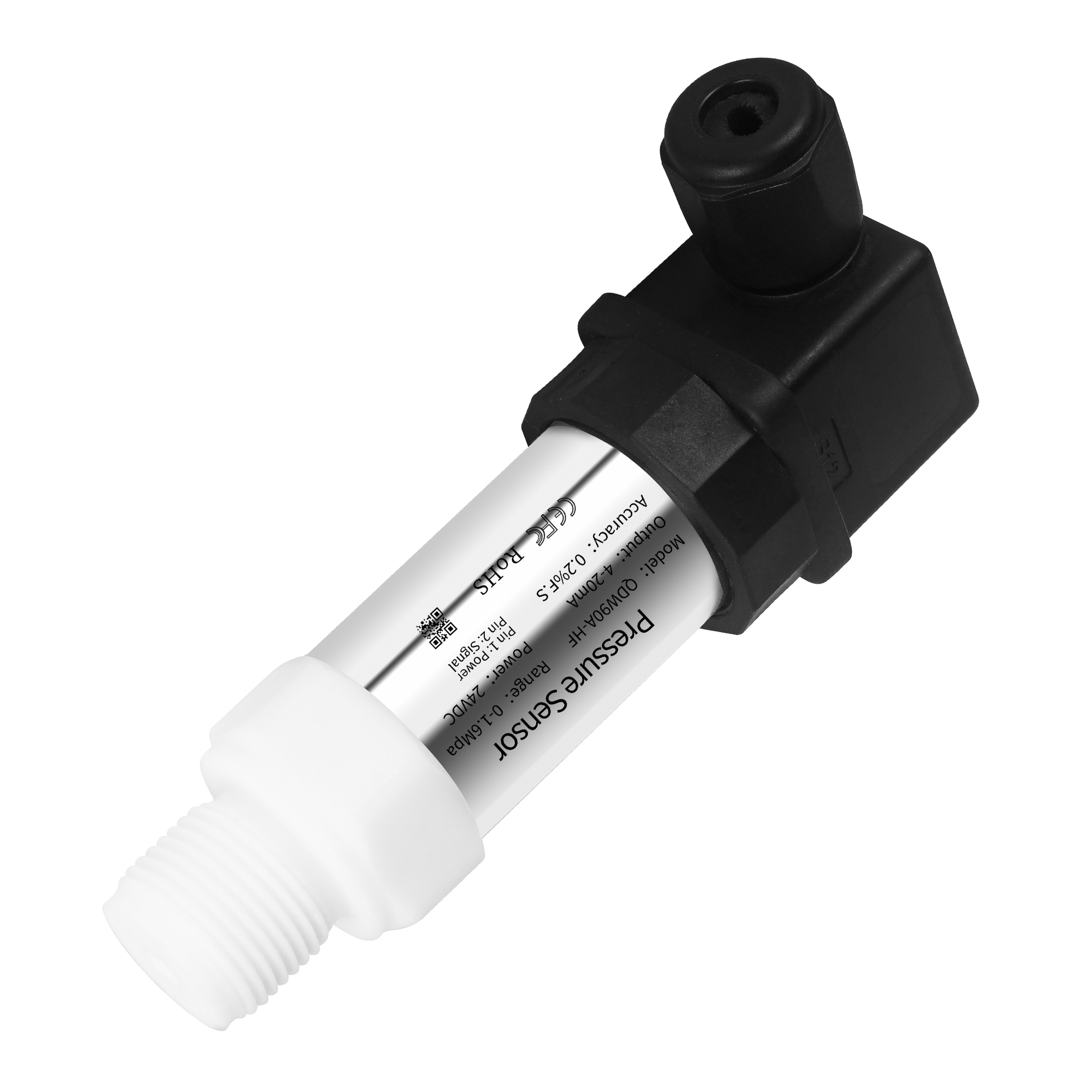
Evaluating a high accuracy smart pressure transmitter requires looking past basic datasheet claims. Verify long-term stability specifications, such as ±0.1% of the Upper Range Limit (URL) for five years. Assess compatibility with modern digital communication protocols. Your facility needs HART, Foundation Fieldbus, Profibus, or IO-Link integration. Evaluate readiness for upcoming Industrial Internet of Things (IIoT) architectures. High turndown ratios (e.g., 100:1) allow you to standardize on fewer sensor models, reducing spare parts inventory.
Scrutinize the manufacturer's thermal compensation methods. Microprocessor-based signal conditioning and advanced onboard diagnostics separate true smart transmitters from basic analog devices. A capable manufacturer will provide detailed documentation on how their sensors handle temperature extremes without drifting out of calibration.
Harsh media destroys standard sensors rapidly. Validating a corrosion-resistant pressure transmitter requires strict material science criteria. You must match the wetted parts to the specific process fluid. Acids, sour gas, and abrasive slurries demand specialized metallurgy and isolation diaphragms.
Wetted Material | Primary Industrial Application | Corrosion Resistance Level |
|---|---|---|
316L Stainless Steel | Water, benign gases, light oils | Standard |
Hastelloy C-276 | Sour gas, severe chemical processing | High |
Monel 400 | Hydrofluoric acid, marine environments | High |
Tantalum | Highly concentrated hydrochloric acids | Extreme |
PTFE Coatings | Sticky media, variable chemical dosing | Specialized |
Beyond wetted materials, assess ingress protection ratings. IP67, IP68, and IP69K ratings dictate survival in wet or dusty environments. Ruggedized housing designs protect internal electronics from extreme ambient conditions and mechanical shock. Look for fully welded, hermetically sealed enclosures when deploying sensors in offshore or heavy washdown environments.
Exporting machinery globally requires strict adherence to regional compliance standards. Intrinsic safety and explosion-proof ratings are mandatory for hazardous areas. You must verify ATEX certificates for Europe, IECEx for global markets, and FM/CSA approvals for the Americas. Functional safety documentation is equally critical. Request Failure Modes, Effects, and Diagnostic Analysis (FMEDA) reports for any SIL 2 or SIL 3 applications. Manufacturers unable to produce these documents immediately pose a severe compliance risk. Do not accept self-certified declarations for critical safety applications. Demand third-party verification from recognized testing laboratories.
Global sourcing dynamics shift rapidly. Evaluate suppliers based on their regional manufacturing strengths. Europe and the Americas offer established precision engineering hubs. Southeast Asia provides high-volume scalability and rapid assembly capabilities. Adapt your procurement strategies to align with market growth trends. Ensure your chosen manufacturer possesses the capital and physical capacity to scale alongside your increasing demand. A supplier running at maximum capacity today will fail to support your growth tomorrow.
A supplier's manufacturing structure dictates their reliability during supply chain shocks. Evaluate their reliance on outsourced components versus in-house machining and sensor fabrication. Vertically integrated manufacturers control their own destiny. They machine their own housings and weld their own diaphragms. Assess their buffer stock policies and raw material sourcing strategies. A manufacturer with strong vertical integration responds much faster to sudden demand surges or custom engineering requests. They do not wait on third-party machine shops to deliver modified process connections.
Never accept a manufacturer's quality claims without auditing their testing protocols. Require absolute traceability of calibration certificates to international standards like NIST or ISO/IEC 17025. Audit their end-of-line testing procedures thoroughly.
Testing Protocol | Purpose | Expected Outcome |
|---|---|---|
Burn-in Testing | Identify early electronic component failures | Eliminates infant mortality in the field |
Pressure Cycling | Verify mechanical fatigue limits | Ensures diaphragm longevity under pulsation |
Environmental Stress Screening (ESS) | Test performance across temperature extremes | Validates thermal compensation algorithms |
Helium Leak Testing | Confirm integrity of welded seals | Guarantees hermetic sealing against moisture |
Global supply chains remain vulnerable to external shocks. Identify risks related to tariffs, export controls, and regional bottlenecks across the Americas, Europe, and Southeast Asia. Semiconductor shortages can drastically extend transmitter lead times. Single-sourcing exposes your production line to massive delays. Establish dual-sourcing strategies for critical instrumentation. Negotiate local inventory agreements with your primary manufacturer. Utilize Vendor-Managed Inventory (VMI) programs to keep buffer stock physically close to your assembly plants. This approach minimizes the impact of port congestions and sudden freight rate spikes.
The relationship with a manufacturer begins, not ends, at delivery. Evaluate the Return Merchandise Authorization (RMA) process. A reliable manufacturer provides detailed root-cause failure analysis, not just a replacement unit. You need to know why a sensor failed to prevent future occurrences. Assess the availability of localized technical support. Firmware updates and field calibration services extend the usable life of your instrumentation and maintain process accuracy over time. Demand an 8D report for any systemic failures to ensure the manufacturer implements permanent corrective actions.
Take the following immediate actions to secure your instrumentation supply chain:
Draft a standardized Request for Information (RFI) detailing your specific environmental conditions, media types, and digital protocol requirements.
Demand physical proof of testing protocols, including sample calibration certificates and third-party FMEDA reports for safety applications.
Audit the manufacturer's vertical integration to confirm their in-house machining, welding, and sensor fabrication capabilities.
Establish a dual-sourcing agreement for your most critical process sensors to mitigate logistical risks and prevent production downtime.
A: An OEM manufacturer designs, machines, and assembles the sensors in-house. They offer deep customization, white-labeling, and direct engineering support. A distributor simply resells finished products from various brands. Distributors provide fast local stock but lack the ability to modify sensor designs or provide root-cause failure analysis.
A: Different regions require specific hazardous area certifications. Europe requires ATEX, the Americas require FM/CSA, and global markets use IECEx. A supplier lacking these certifications restricts your ability to export machinery or operate legally in those specific regions.
A: Focus on digital communication protocols like HART, Profibus, or IO-Link. You need advanced onboard diagnostics, microprocessor-based signal conditioning, and long-term stability. These features ensure the sensor provides actionable data for predictive maintenance rather than just a basic analog signal.
A: Standard 316L stainless steel fails in aggressive chemicals. You need Hastelloy C-276 for sour gas, Monel for hydrofluoric acid, and Tantalum for highly concentrated hydrochloric acids. PTFE coatings also protect against sticky or variable chemical media.
A: Facilities operating under strict safety regulations require SIL 2 or SIL 3 rated instruments. You must select a manufacturer capable of providing comprehensive FMEDA reports. These reports prove the sensor's failure rates meet the mathematical requirements for your safety instrumented system.
A: Request documented evidence of Environmental Stress Screening (ESS) and pressure cycling tests. Ask for traceability of their calibration equipment to ISO/IEC 17025 or NIST standards. Review their published specifications for drift over a 5-year or 10-year period.


